I am posting this video here just because, well, it's pretty awesome. I like to appreciate awesome when I see it, so here it is. Some crazy long football and basketball shots.

Sometimes the Middle is the most Extreme.
Saturday, February 9, 2013


Friday, February 8, 2013
Tiny Houses and God-Men

For those of you who don't know, the season of Lent in the Catholic Church is a six-week trial-by-fire in the early springtime of heavy spiritual lifting (fasting, abstaining from meat, giving up our daily pleasures as sacrifices, praying.) It is a sort of boot camp for the soul, especially for those who will be baptized on Easter. In the end it becomes a time to scrap everything in your life that you really don't need, to dig until you find the real naked you underneath, to detach yourself from all that you thought important in order to rearrange your priorities.
It is very cathartic, to say the least.
It is a season that begins with a reminder of death, when ashes are applied to the forehead with the words "Remember, man, that thou art dust, and to dust you shall return." It is also a season that nearly ends with a re-imagining of one of the most brutal kinds of deaths, being nailed with iron spikes through the hands and feet to a cross and left to asphyxiate/bleed to death. But in the very end, Lent is preparation for a miniature heaven, that of the remembrance of the resurrection from the dead of a man who was also God.
This year I think is going to host a very good Lent. My wife and I have already resolved on our own special sacrifices and my children are getting old enough to understand what is going on this time around. Also, on a more national level, our country is gearing up for what looks like a showdown between God and government, between the laws of men and the laws of the Almighty. It will separate the mediocre from the fervent, the true from the false. It will be a trial by fire.
But more importantly I think is the small, individual purifying struggles that will be the arbiter of the quality of this Lent. An example of this: I was recently inspired by secular sources on YouTube concerning the Tiny House movement, in which people realize that their big mortgage, big square-footage houses are not providing happiness and so downsize to very small homes. They in many ways unconsciously express the great truth of being poor in spirit, of being happy with fewer things, of ridding themselves of excess and unnecessary clutter. My wife and I have become inspired to do the same thing, but infused with a Christian sense of poverty of spirit, and it has yielded amazing results so far (we aren't nearly done yet...) Our tiny apartment seems so much larger now that we got rid of a few things and rearranged others and generally dealt with the mindless junk that we have kept for so long. It is freeing.
So next week, when Lent begins in earnest with that very long hungry Wednesday, be of good cheer. We are about to decompress and declutter for 2013. We are about to become more free, more ourselves, and more good, as long as we let the God-man in to do His work.
Photo by LemosaCorel, via Wikipedia.
Wednesday, January 30, 2013
Europe As We Know It...
This article is reprinted with permission from Population Research Institute.
Europe as We Know It is Dying
What Will Follow the Winter of Western Civilization?
by Steven W. Mosher
It’s happened before.
 Writing a century and a half before the birth of Christ, the Greek historian Polybius observed “nowadays all over Greece such a diminution in natality and in general manner such depopulation that the towns are deserted and the fields lie fallow. Although this country has not been ravaged by wars or epidemics, the cause of the harm is evident: by avarice or cowardice the people, if they marry, will not bring up the children they ought to have. At most they bring up one or two. It is in this way that the scourge before it is noticed is rapidly developed.”
He concluded by urging his fellow Greeks to return to their historic love of family and children. “The remedy is in ourselves,” he wrote. “We have but to change our morals.” His advice, unfortunately, went largely unheeded.
The demographic winter of the Greek city-states led to economic stagnation and military weakness, which in turn invited invasion and conquest. After a century of increasing dominance in the Eastern Mediterranean, Rome finally annexed the Greek city-states in 146 B.C.
Will a Europe in the grip of a similar demographic winter come to a similar unhappy end? Certainly Europeans of today, like the Greeks of old, are barely having children. The birthrate across the entire continent is far below the replacement level of 2.1 children per couple. Italy, Spain, Austria, and Germany have total fertility rates, or TFRs, of only 1.4 or so, while Poland and Russia languish at 1.32 and 1.2 respectively. The more or less generous child allowances these countries pay the prolific has scarcely caused these numbers to budge. The birth dearth continues to widen.
Meanwhile, adherents of pro-family sects such as Islam are moving in, having children, and repopulating historic Christendom. Is this process likely to continue? And to what end?
Most Muslim countries in North Africa and the Middle East have fertility rates two or three times as high as Europe. Afghanistan and Somalia, whose fertility rates are above 6 children (6.62 and 6.4 respectively), may be outliers. But other Middle Eastern countries with above-replacement TFRs include Iraq at 4.86, Pakistan at 3.65, and Saudi Arabia at 3.03. Even immigrants from the most Westernized Muslim countries such as Turkey and Tunisia average nearly twice as many children as the extant populations of most European countries.
While falling fertility may be humanity’s general fate, it is this differential fertility that will determine Europe’s destiny. Although the birthrates of Muslim immigrants to Europe are far lower than they were just a generation ago, they are still far more open to life than highly secularized Europeans. Moreover, these immigrants, once in place in Germany, Italy, Spain, etc., tend to maintain their relatively high fertility for a generation.
As a result of this potent mix of immigration and procreation, the number of Muslims will continue to grow. Europe as a whole, some demographers suggest, will have a majority Muslim population by 2100.
What a strange twist of history! Over the centuries, various Muslim armies have repeatedly attempted to conquer Europe. Time and time again, at Tours, Vienna, at Lepanto, at Malta, they were thrown back. Yet now what their forebears were unable to accomplish by force, their distant descendants will achieve by peacefully winning the Battle of the Cradle.
Whether they will be radicalized or secularized Muslims is the central question. If they are radicalized, then we can expect efforts to impose Sharia law in country after country, along with the growing persecution of the Christian minority. Catholics in Germany, for example, may come to be treated in largely the same way that Coptic Christians in Egypt have been for the last few centuries, that is to say, as second-class citizens, to be maligned, taxed and beaten almost at will.
If, on the other hand, the second- and third-generation Muslims are largely secularized, then the Christian minority will be, presumably, treated somewhat better, though still subject to some level of discrimination. As everyone knows by now, the Secular Left preaches a tolerance that it generally does not practice.
Either way, believers in once-Christian Europe will probably find themselves living in what might be called a pre-Constantine moment. In others words, they will be living under regimes that punish, even persecute, them for their beliefs.
At the present moment, Europeans still control their own destiny. As Polybius, were he alive today, would surely remind them: “The remedy is in yourselves. You have but to change your morals.”
Europe as We Know It is Dying
What Will Follow the Winter of Western Civilization?
by Steven W. Mosher
It’s happened before.
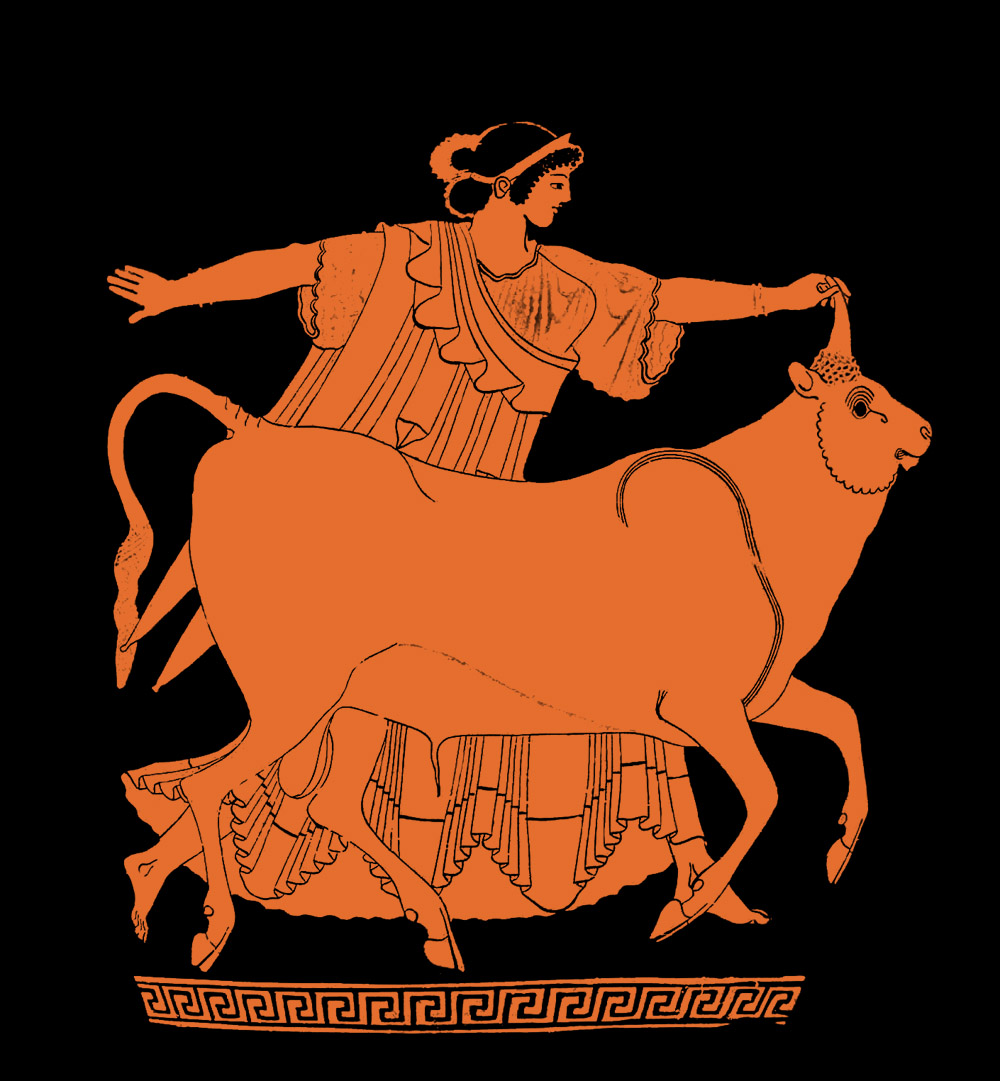
He concluded by urging his fellow Greeks to return to their historic love of family and children. “The remedy is in ourselves,” he wrote. “We have but to change our morals.” His advice, unfortunately, went largely unheeded.
The demographic winter of the Greek city-states led to economic stagnation and military weakness, which in turn invited invasion and conquest. After a century of increasing dominance in the Eastern Mediterranean, Rome finally annexed the Greek city-states in 146 B.C.
Will a Europe in the grip of a similar demographic winter come to a similar unhappy end? Certainly Europeans of today, like the Greeks of old, are barely having children. The birthrate across the entire continent is far below the replacement level of 2.1 children per couple. Italy, Spain, Austria, and Germany have total fertility rates, or TFRs, of only 1.4 or so, while Poland and Russia languish at 1.32 and 1.2 respectively. The more or less generous child allowances these countries pay the prolific has scarcely caused these numbers to budge. The birth dearth continues to widen.
Meanwhile, adherents of pro-family sects such as Islam are moving in, having children, and repopulating historic Christendom. Is this process likely to continue? And to what end?
Most Muslim countries in North Africa and the Middle East have fertility rates two or three times as high as Europe. Afghanistan and Somalia, whose fertility rates are above 6 children (6.62 and 6.4 respectively), may be outliers. But other Middle Eastern countries with above-replacement TFRs include Iraq at 4.86, Pakistan at 3.65, and Saudi Arabia at 3.03. Even immigrants from the most Westernized Muslim countries such as Turkey and Tunisia average nearly twice as many children as the extant populations of most European countries.
While falling fertility may be humanity’s general fate, it is this differential fertility that will determine Europe’s destiny. Although the birthrates of Muslim immigrants to Europe are far lower than they were just a generation ago, they are still far more open to life than highly secularized Europeans. Moreover, these immigrants, once in place in Germany, Italy, Spain, etc., tend to maintain their relatively high fertility for a generation.
As a result of this potent mix of immigration and procreation, the number of Muslims will continue to grow. Europe as a whole, some demographers suggest, will have a majority Muslim population by 2100.
What a strange twist of history! Over the centuries, various Muslim armies have repeatedly attempted to conquer Europe. Time and time again, at Tours, Vienna, at Lepanto, at Malta, they were thrown back. Yet now what their forebears were unable to accomplish by force, their distant descendants will achieve by peacefully winning the Battle of the Cradle.
Whether they will be radicalized or secularized Muslims is the central question. If they are radicalized, then we can expect efforts to impose Sharia law in country after country, along with the growing persecution of the Christian minority. Catholics in Germany, for example, may come to be treated in largely the same way that Coptic Christians in Egypt have been for the last few centuries, that is to say, as second-class citizens, to be maligned, taxed and beaten almost at will.
If, on the other hand, the second- and third-generation Muslims are largely secularized, then the Christian minority will be, presumably, treated somewhat better, though still subject to some level of discrimination. As everyone knows by now, the Secular Left preaches a tolerance that it generally does not practice.
Either way, believers in once-Christian Europe will probably find themselves living in what might be called a pre-Constantine moment. In others words, they will be living under regimes that punish, even persecute, them for their beliefs.
At the present moment, Europeans still control their own destiny. As Polybius, were he alive today, would surely remind them: “The remedy is in yourselves. You have but to change your morals.”
Subscribe to:
Posts (Atom)