Showing posts with label Europe. Show all posts

Wednesday, January 30, 2013

Europe As We Know It...

This article is reprinted with permission from Population Research Institute.


Europe as We Know It is Dying

What Will Follow the Winter of Western Civilization?

by Steven W. Mosher

It’s happened before.

Writing a century and a half before the birth of Christ, the Greek historian Polybius observed “nowadays all over Greece such a diminution in natality and in general manner such depopulation that the towns are deserted and the fields lie fallow. Although this country has not been ravaged by wars or epidemics, the cause of the harm is evident: by avarice or cowardice the people, if they marry, will not bring up the children they ought to have. At most they bring up one or two. It is in this way that the scourge before it is noticed is rapidly developed.”

He concluded by urging his fellow Greeks to return to their historic love of family and children. “The remedy is in ourselves,” he wrote. “We have but to change our morals.” His advice, unfortunately, went largely unheeded.

The demographic winter of the Greek city-states led to economic stagnation and military weakness, which in turn invited invasion and conquest. After a century of increasing dominance in the Eastern Mediterranean, Rome finally annexed the Greek city-states in 146 B.C.

Will a Europe in the grip of a similar demographic winter come to a similar unhappy end? Certainly Europeans of today, like the Greeks of old, are barely having children. The birthrate across the entire continent is far below the replacement level of 2.1 children per couple. Italy, Spain, Austria, and Germany have total fertility rates, or TFRs, of only 1.4 or so, while Poland and Russia languish at 1.32 and 1.2 respectively. The more or less generous child allowances these countries pay the prolific has scarcely caused these numbers to budge. The birth dearth continues to widen.

Meanwhile, adherents of pro-family sects such as Islam are moving in, having children, and repopulating historic Christendom. Is this process likely to continue? And to what end?

Most Muslim countries in North Africa and the Middle East have fertility rates two or three times as high as Europe. Afghanistan and Somalia, whose fertility rates are above 6 children (6.62 and 6.4 respectively), may be outliers. But other Middle Eastern countries with above-replacement TFRs include Iraq at 4.86, Pakistan at 3.65, and Saudi Arabia at 3.03. Even immigrants from the most Westernized Muslim countries such as Turkey and Tunisia average nearly twice as many children as the extant populations of most European countries.

While falling fertility may be humanity’s general fate, it is this differential fertility that will determine Europe’s destiny. Although the birthrates of Muslim immigrants to Europe are far lower than they were just a generation ago, they are still far more open to life than highly secularized Europeans. Moreover, these immigrants, once in place in Germany, Italy, Spain, etc., tend to maintain their relatively high fertility for a generation.

As a result of this potent mix of immigration and procreation, the number of Muslims will continue to grow. Europe as a whole, some demographers suggest, will have a majority Muslim population by 2100.

What a strange twist of history! Over the centuries, various Muslim armies have repeatedly attempted to conquer Europe. Time and time again, at Tours, Vienna, at Lepanto, at Malta, they were thrown back. Yet now what their forebears were unable to accomplish by force, their distant descendants will achieve by peacefully winning the Battle of the Cradle.

Whether they will be radicalized or secularized Muslims is the central question. If they are radicalized, then we can expect efforts to impose Sharia law in country after country, along with the growing persecution of the Christian minority. Catholics in Germany, for example, may come to be treated in largely the same way that Coptic Christians in Egypt have been for the last few centuries, that is to say, as second-class citizens, to be maligned, taxed and beaten almost at will.

If, on the other hand, the second- and third-generation Muslims are largely secularized, then the Christian minority will be, presumably, treated somewhat better, though still subject to some level of discrimination. As everyone knows by now, the Secular Left preaches a tolerance that it generally does not practice.

Either way, believers in once-Christian Europe will probably find themselves living in what might be called a pre-Constantine moment. In others words, they will be living under regimes that punish, even persecute, them for their beliefs.

At the present moment, Europeans still control their own destiny. As Polybius, were he alive today, would surely remind them: “The remedy is in yourselves. You have but to change your morals.”


Tuesday, June 19, 2012

Imitation Can Be Unflattering

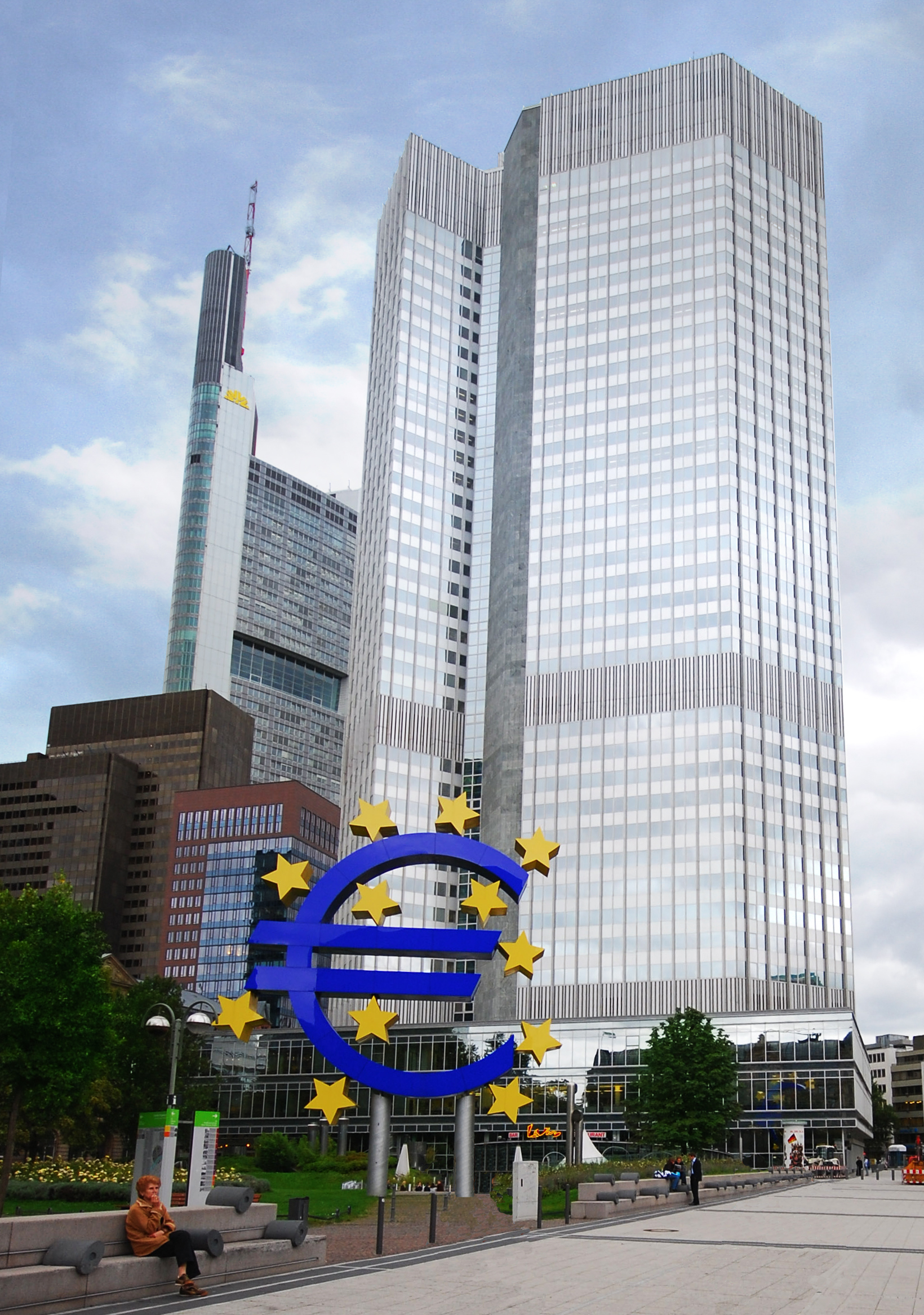
The European Central Bank
I was only recently introduced to the writings of columnist Victor Davis Hanson, but already I have found him to be an insightful and very readable author. His site is also host to a couple other authors, including Bruce Thornton, an even more brilliant and penetrating mind. Here is a piece Thornton wrote last week about the financial crisis in the EU, providing both a historical perspective on the problem and also a warning to those who insist that bigger and more inclusive is better.


Photo by Eric Chan, via Wikimedia Commons.

Thursday, May 24, 2012

My Hero Angela Merkel

Angela Merkel
Photo by Armin Linnartz
The BBC World Service has been doing its usual bang-up job of reporting European politics this week. Greece of course tends to dominate that news, after several governmental failures to assemble a sound fiscal policy, a run on  Greek banks, and now this week's newest Greek financial disasters. To add to the ever-expanding and cascading problems, a new French president has been elected, a Socialist with the same tired ideas of government fixes for all problems including economic growth. Italy, Spain, and Ireland are not faring much better either.

And yet, in the midst of this rash of fiscal irresponsibility and crisis, I am happy to point out the last remaining financial adult in the room of European politics, German Chancellor Angela Merkel.

I cannot say that I agree with her policies and positions one hundred percent of the time. Many of her beliefs and accomodations have been against my liking. But I must applaud her where applause is due: she is the only one pursuing a viable path with regard to the euro and the continued success of the European Union.

Ms. Merkel has pursued a policy of fiscal austerity in Germany for the past several years now, in an attempt to curb explosive debt and budget deficits. The credit is hers for insisting that the government live within its means. Yet her position of fiscal austerity has become increasingly marginalized as more and more pressure is brought to bear on her to "evolve" with the rest of Europe (and the United States) and to dump more stimulus money on the economic fire.

This unpopularity is symptomatic of both the problems with the composition of the EU and with the personalities and philosophies involved. Germany happens to be the economic powerhouse of Europe at the moment and the one with the most financial clout, whilst the other countries are being run under much more liberal financial conditions and are suffering mounting debt and credit problems. There is jealousy of Germany's success, to be sure, without a proper understanding of why it is successful.

But this week's developments have not only brought all these issues to a head, but have also demonstrated Ms. Merkel's resolve to remain solvent in the face of extraordinary opposition . The leadership of the EU is floating the idea of selling "euro bonds," or generating stimulus cash by selling European debt. The idea is both stupid and dangerous.  It is stupid because none of the EU countries needs or can afford to add any more debt to their ever-growing pile. But more importantly, it is dangerous because (as the BBC has pointed out) Germany would be the one left holding the bill because of its sound financial position. In effect, Germany's success would subsidize the other EU nations' failures.

Angela Merkel has fought the other EU nations' fiscal policies before, but this is probably the biggest challenge she will have yet, mainly because both President Barack Obama and new socialist French President Francois Hollande are both pushing heavily for it. Merkel realizes that Germany is being called upon to pay for economic failure that was not of its own doing, and rightfully resents that call.

She has already begun to voice her disagreement on this issue, and I pray she fights vigorously against it. She is a sane head amidst other heads that seem permanently stuck in the clouds. God bless her.

Monday, May 21, 2012

The European Debt Crisis

The Parthenon in Athens - Photo by Steve Swayne
I am fortunate enough to have some great intellectually-minded friends who manage to get content posted in big publications. Here is an article from The American Spectator website written by a friend of mine from my school days, concerning the crisis of debt and spending in Europe. Kudos to his new wife for making me aware of it!